


ROBOTICS LAB
A laboratory where you can work, experiment, and build service robots, social robots, and intelligent solutions applied to healthcare, education, industry, logistics, mobility, and everyday life.

Inscripciones Abiertas
Together with Bumerania Robotics, we bridge education and industry in a meaningful way through up to 50% off tuition scholarship.
Last places remaining! 11 places left. Check availability with the UDIT Admissions Team.

If you want to know more, you can fill in this form and we will contact you as soon as possible. We will send you the official brochure, where you will find all the detailed information about the programme, the curriculum, career opportunities, the admission process and much more so that you can make the best decision.
Spain’s first official undergraduate degree dedicated to human-centered robotics. A program designed to meet the demands of a new generation of robots and intelligent systems already reshaping fields such as healthcare, education, smart living, and assistive technologies.The future of robotics is no longer confined to factories. It is becoming part of everyday life, creating the need for professionals capable of developing technologies that adapt to people, communicate naturally, and deliver meaningful real-world impact.
At UDIT, you will learn by building from day one, developing real-world projects and working in professional environments where ideas evolve into functional prototypes. You will combine robotics, Artificial Intelligence, digital systems, design, and human, machine interaction while creating solutions aligned with industry needs and the technological challenges of the future.
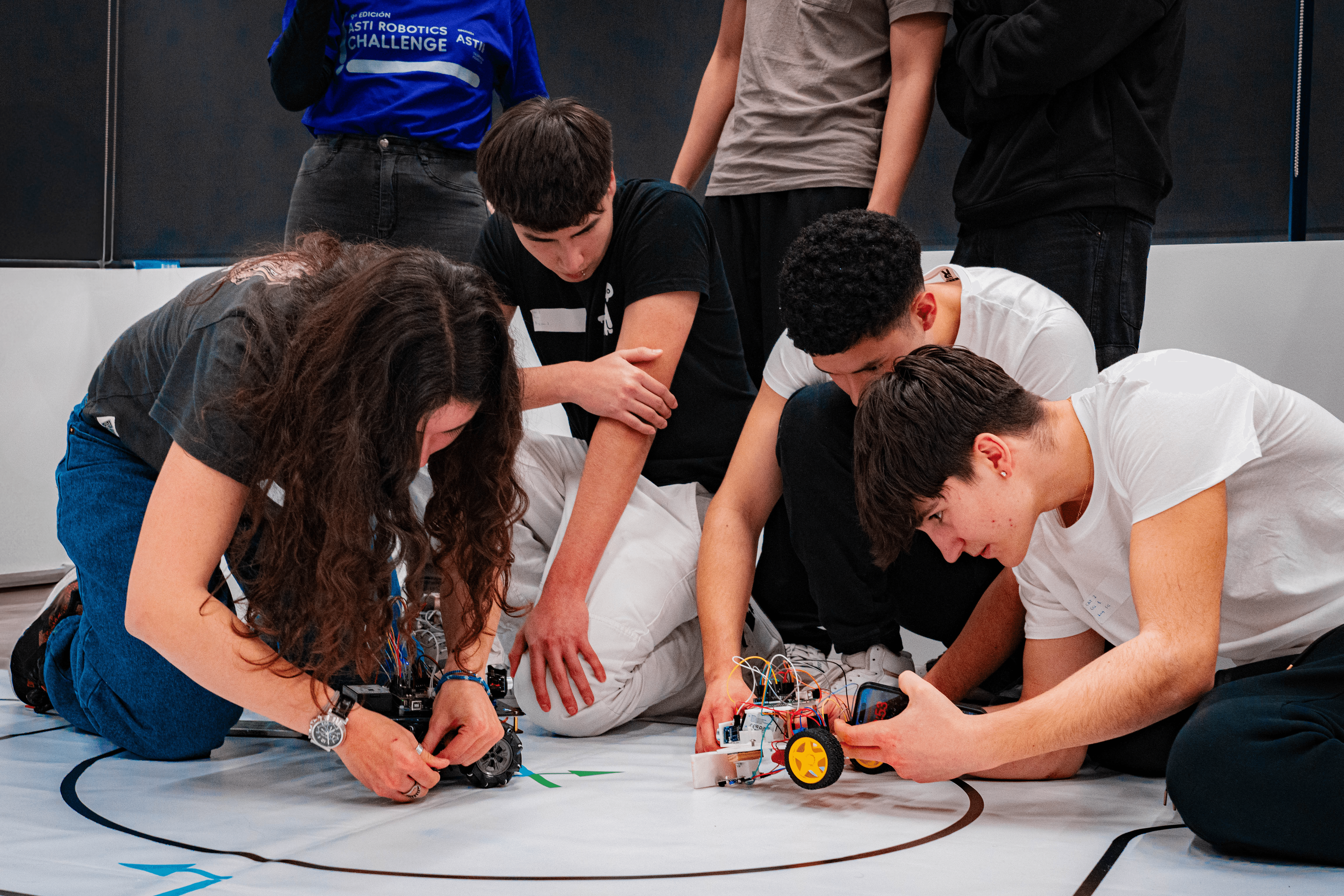
You will collaborate with real companies in professional labs and workshops, designing and developing your own intelligent robotic systems. Through experimentation, iteration, and hands-on practice, you will learn how innovation truly happens, testing, refining, and building projects that reflect the way the industry operates today, supported by close mentorship and a highly personalized learning experience. Because robotics is learned by creating.
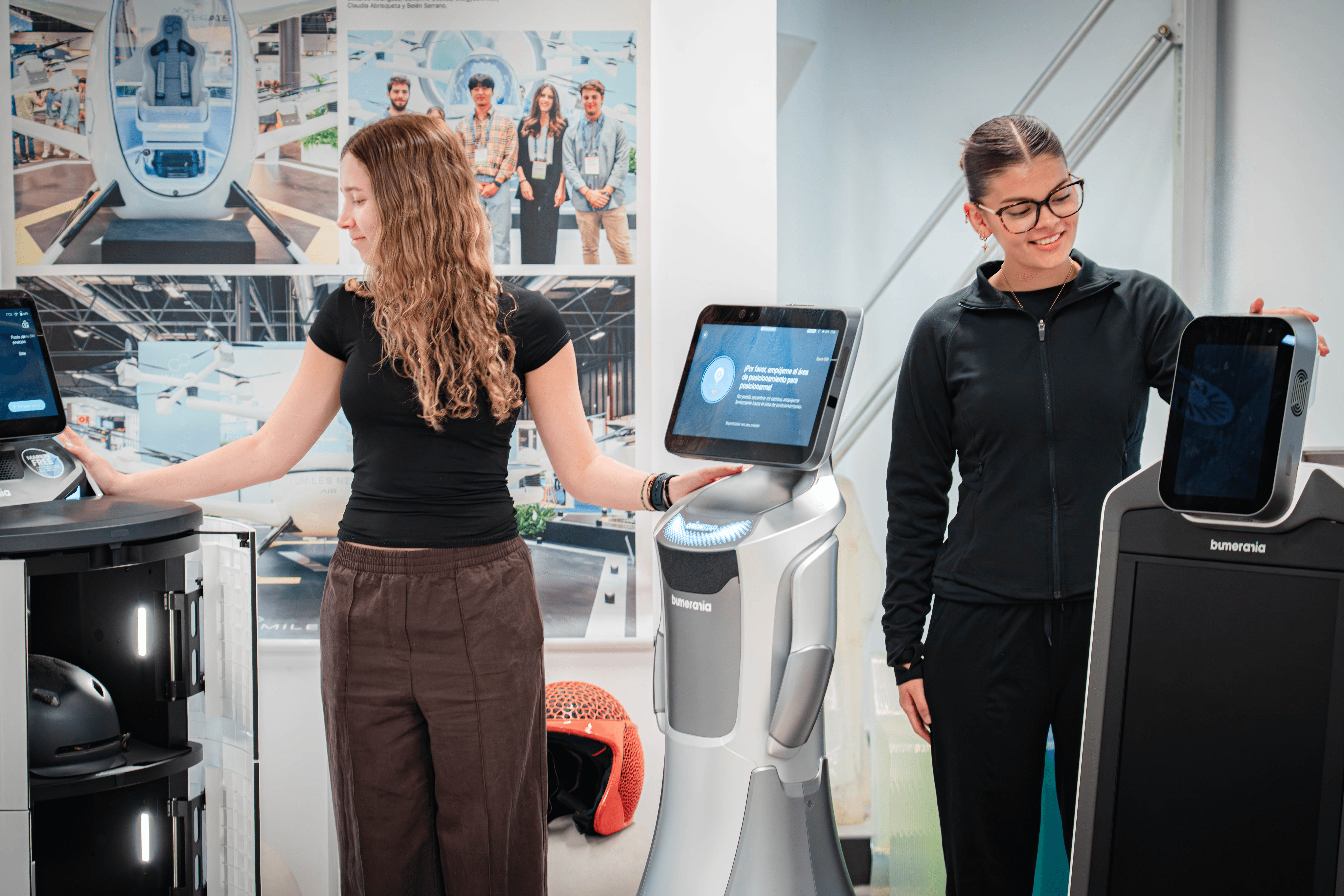

The future of robotics extends far beyond industrial automation. Robots are increasingly becoming part of sectors such as healthcare, education, smart living, and assistive technologies, creating a growing demand for professionals capable of developing technology designed around human needs.
Studying Robotics at UDIT means joining a unique specialization in Spain, one that combines robotics, programming, electronics, and Artificial Intelligence with design and human–machine interaction to prepare the next generation of innovators shaping how we will live, work, and interact with technology.

It means learning to design and develop robots with a focus not only on technology, but also on the user experience, interaction, safety, usability, and real-world impact. The goal is not simply to make a robot work, but to create systems that can assist, support, communicate naturally, and operate safely and effectively in real-life environments.

We have partnered with Bumerania to connect UDIT’s Bachelor’s Degree in Human-Centered Robotics with the realities of the industry, through active involvement in the program via mentoring, collaborative projects, and direct engagement with the professional sector.
With the aim of fostering emerging talent in the field of robotics in Spain, we have launched up to 50% tuition scholarship for high-potential students who are ready to take the next step and become part of a new generation of professionals shaping the future of robotics.

You will travel to Shenzhen, the world’s leading technology hub, where you will visit some of the most influential global companies in robotics and innovation. A unique international experience designed to give you first-hand exposure to the technologies, processes, and industry leaders shaping the future.


At UDIT, internships are an integral part of the academic curriculum and are guaranteed for every student. We work closely with companies and institutions to connect you with the professional world and help you build meaningful industry experience from the very beginning of your university journey.
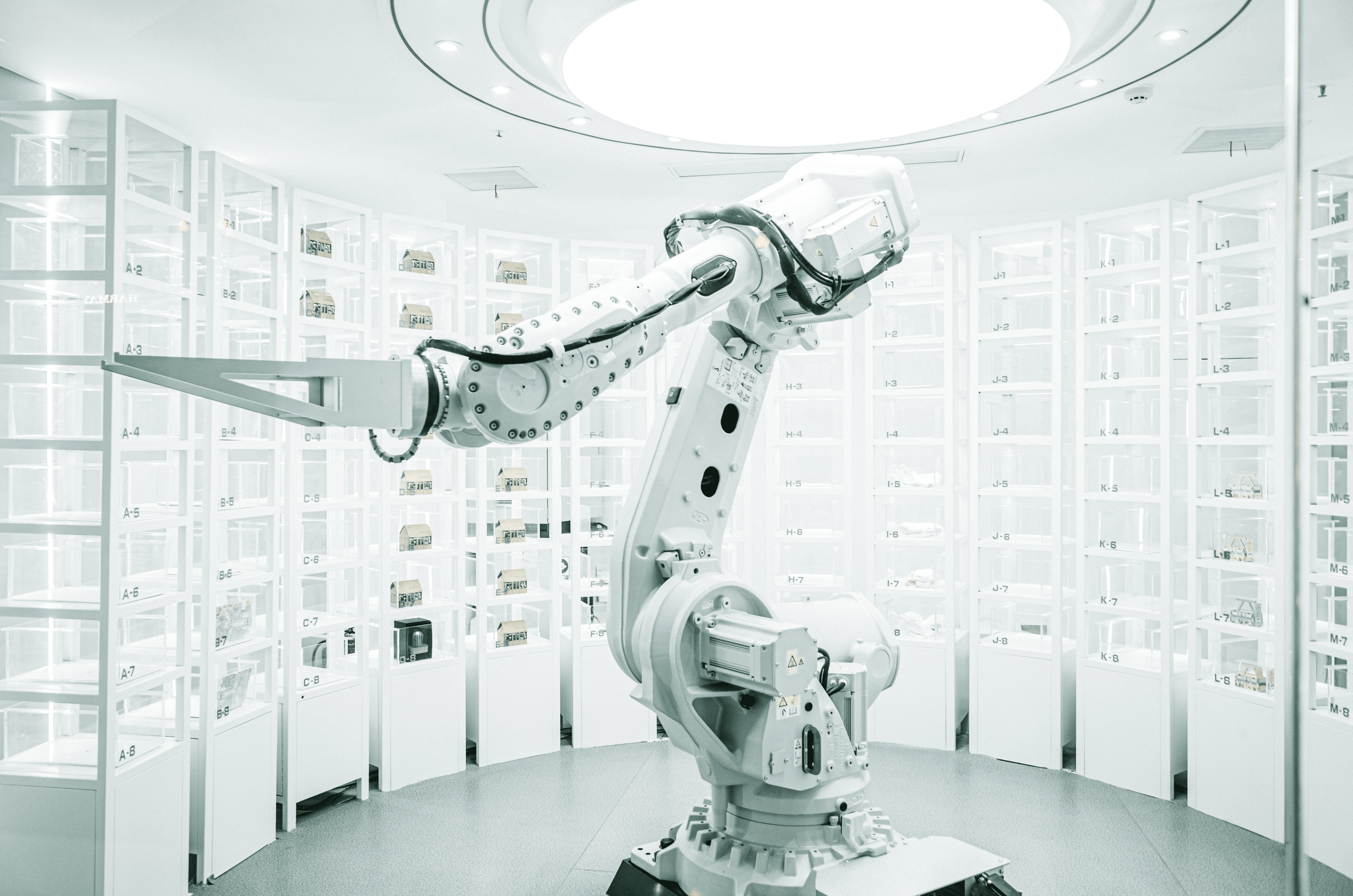
Upon graduation, you will be prepared to develop robotic and intelligent solutions across sectors such as healthcare, industry, logistics, mobility, education, retail, assistive technologies, smart cities, and advanced automation.
A laboratory where you can work, experiment, and build service robots, social robots, and intelligent solutions applied to healthcare, education, industry, logistics, mobility, and everyday life.

A space of more than 1,000 m' where students develop their projects from idea to prototype. An environment designed to work, test and improve solutions in real conditions. It is part of the international network of laboratories promoted by Airbus.

You will have the opportunity to become certified as an expert in SolidWorks, mastering one of the leading mechanical design software tools for 2D and 3D modeling.

A workshop space where you can work with real materials and processes. From woodworking machinery and physical manufacturing processes to advanced prototyping technologies such as 3D printing, laser cutting, CNC or welding and electronics equipment, here your ideas are built, tested and turned into objects from the very first moment.

Workspaces equipped with Wacom Cintiq 22” graphic tablets, high-performance workstations, and professional software, designed for developing and visualizing your product design projects. An environment where you can ideate, model, and refine your concepts with precision, integrating creativity and technology at every stage of the process.
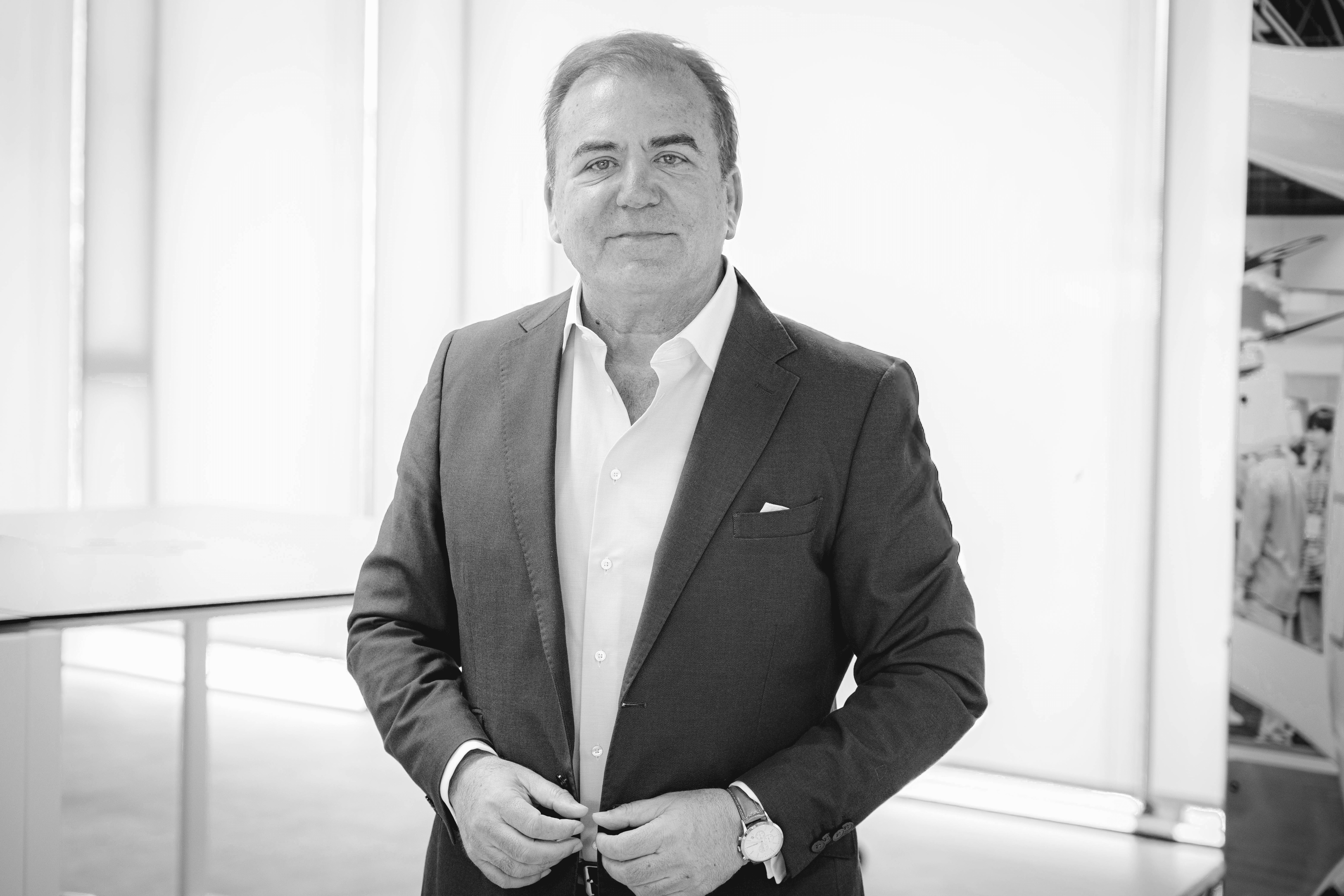
Isidro Fernández is the CEO and Founder of Bumerania Robotics, a leading company in the development of advanced social robotics solutions. Under his leadership, the company has positioned itself at the forefront of the industry, creating robots designed to simplify everyday life, foster human connection, and enhance people’s quality of life.


Dr. Luis Peña
PhD in Computer Engineering from the Universidad Rey Juan Carlos. Founder of a Technology Startup, awarded by A

International awards won in recent years by our students.
Spain’s first official Bachelor’s Degree focused on human-centered robotics.
National Design Award and recipient of the Education & Training Award at the Madrid Open Cities Awards.
Top score in teaching quality and employability in the international QS ranking.


If you want to specialize after your degree, explore our extensive range of university master’s programs in key areas that are currently in high demand among technology companies.
Because at UDIT we offer a unique and successful methodology. This methodology is built on a vocation for creativity, innovative and up-to-date study plans, the integration of technology and innovation as a guiding thread, project-based learning grounded in real briefs, and critical thinking fostered by our academic staff.
The market currently demands professionals capable of leading technology and robotics projects in areas such as logistics, agriculture, transport, automotive, aeronautics, services and healthcare.
This official degree sits at the intersection of robotics, programming, artificial intelligence, user experience and design. It is a pioneering degree within Spanish higher education, as it focuses on Human-Centred Robotics. With an innovative and up-to-date study plan, it takes as a reference Anglophone research and programmes in Human-Centred Robotics.
Robotics engineering is a discipline that brings together knowledge and technological advances from other engineering fields—such as mechanical engineering, electronics, computer science, telecommunications and industrial engineering—through which engineers design, develop and operate robots for a range of purposes.
Service robotics is a discipline that focuses the development of robotic applications and devices on the end user and their interaction with them.
You will use several programming languages, including C++, C#, Python and Java (JDK/JRE), together with their most widely used libraries.
You will learn to use leading development environments such as Express.js, Visual Studio, TensorFlow, Anaconda, NLTK, Apache and Eclipse.
You will work with software development tools such as SQL Server, MongoDB, OpenCV and Tableau.
Visualisation and prototyping tools: Autodesk Fusion 360, AutoCAD, Proteus, LTspice, Figma, Adobe Creative Cloud, KiCad, RobotStudio and Gazebo Simulator.
The International Federation of Robotics (IFR) defines service robotics as “a robot or equipment for personal or professional use that performs useful tasks for humans, excluding industrial automation applications”.
The key difference from industrial robotics lies in the intended application. Industrial robotics refers to robots used in industrial automation; they are typically large, have similar functionalities, and perform repetitive tasks.
By contrast, service robots tend to be smaller and more mobile, and their capabilities vary depending on the end application.
If you want to study the Degree in Robotics, you can do so without having completed a specific Bachillerato pathway; you must meet the entry requirements set out in Article 3 of Royal Decree 412/2014. That said, the recommended entry profile is a student with a strong affinity for technology, solid performance in mathematics, and a clear interest in problem-solving.
Ideally, you should have completed the Science and Technology Bachillerato, with particular focus on Mathematics and, where possible, subjects related to computing, programming and technology more broadly.
The first step is to request information. You can do this via the website, by phone on +34 91 555 25 28, or by email at orientacion.universitaria@udit.es.
The next step is to take a placement test. Its purpose is to assess the student’s academic competencies and identify any support needs before the start of the academic year.
Once the test has been completed and admission to UDIT has been confirmed, you should pay the enrolment reservation fee to secure your place for the next academic year. Places are allocated strictly in order of reservation.
Yes. All Bachelor’s degrees offered at UDIT are official and internationally recognised.
Be cautious with other programmes marketed as “official Bachelor’s degrees” that, in reality, are not.
To verify whether a degree is official, you should consult the RUCT (Register of Universities, Centres and Qualifications) website, or another official body under the Ministry of Universities responsible for academic regulation and the official status of university degrees.
If you are coming from the Spanish education system, to study this degree at UDIT you must meet at least one of the following requirements:
Applicants from education systems outside Spain:
All of our Bachelor’s degrees start from scratch, so you do not need to have followed a specific Bachillerato pathway.
Given the nature of our programmes, it is generally recommended to have completed the Science and Technology Bachillerato, with particular focus on Mathematics and, where possible, subjects related to computing, programming and technology more broadly.
Although it is not essential, previous programming experience and involvement in personal software development projects are a significant added value.
Upon completing the Degree in Human-Centred Robotics, you will be able to work in roles such as:
UDIT does not require a minimum entry grade to access the Degree in Human-Centred Robotics. However, given the specific nature of the programme, prospective students must complete UDIT’s own admission tests.
Download a PDF with answers to the most frequently asked questions about this degree. We’re here to answer all your questions.
Number of places on the Bachelor’s Degree in Human-Centred Robotics: 70
Just follow these four simple steps
Request Information
Fill in the following form, call us on 91 555 25 28 or write to us at orientacion.universitaria@udit.es and solve all your doubts about the qualifications you are most interested in.
Come and visit us
Arrange a visit to our Madrid campus from Monday to Friday from 10.00 to 18.00 hours, sign up for the Open Days we hold on Saturdays or the online information sessions.
Admissions Process
University Degrees: To ensure the best alignment between your profile and the chosen degree programme, the admissions process includes two stages:
Formalise your registration
Once you have taken the test and have been informed of your admission to UDIT, you must book your enrolment to guarantee your place for the next course. Places are allocated in strict order of booking.

